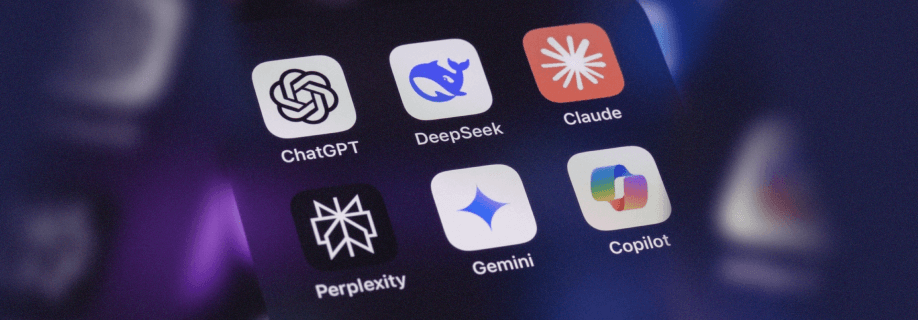
Why "Rank #1" Stopped Being the Whole Game
Somewhere in the last eighteen months, the SEO scoreboard changed underneath everyone's feet. You could still land the top organic spot for a query and watch a competitor's page get quoted directly in the AI Overview sitting above it - sometimes a page that doesn't even crack the top 20.
That's not a glitch. It's the new normal. An Ahrefs study of 1.9 million citations found that as of July 2025, 76% of cited pages in AI Overviews also ranked in the organic top 10. By early 2026, multiple follow-up studies put that overlap between 17% and 38%, per SEOScaleUp's data roundup. Ranking still helps. It just stopped being sufficient on its own.
What Actually Changed, and Why
Google's AI Overviews are built on Gemini, and they pull from Google's existing search index rather than a separate crawl - that part hasn't changed. What has changed is how the system assembles an answer. Instead of answering your exact query, AI Overviews and AI Mode decompose it into several related sub-queries, a process called "query fan-out," then pull passages from across a much wider result pool to construct the response.
That single mechanic explains most of the confusion founders feel when they check their rankings and their AIO visibility separately and get two different pictures. Pages that rank for the main query and at least one fan-out sub-query were 161% more likely to get cited - which means a narrow article answering one question well can outperform a sprawling guide that never fully resolves any single sub-question.
The model itself matters too. When Google made Gemini 3 the default AI Overviews model on January 27, 2026, roughly 42% of previously cited domains dropped out of citation sets almost overnight, per one study of 100,000 keywords. Citation isn't a fixed asset you earn once. It's closer to a live auction that reshuffles every time the underlying model changes.
The Eight Moves That Actually Correlate With Citations
1. Answer in the First 100 Words
Structure content to answer the query directly before you do anything else - no scene-setting, no "in today's fast-evolving landscape" preamble. AI Overviews favor content that resolves the query in the opening passage, then expands with supporting detail.
2. Cover the Sub-Questions, Not Just the Headline Keyword
Because of query fan-out, a page that only answers "what is programmatic SEO" misses the citation opportunities buried in "how does it differ from templated pages" or "what's the minimum page count for pSEO to work." Map the sub-questions before you outline, not after.
3. Build Brand Mentions, Not Just Backlinks
This is the one most SEO teams still under-invest in. Brand mentions - being named in industry roundups, Reddit threads, YouTube descriptions, G2 comparisons - correlate with AI visibility at 0.664, more than triple the correlation for backlinks at 0.218. A guest post with zero backlink value but a genuine brand mention on a high-traffic community thread can move the needle more than another link-building campaign.
4. Keep Content Fresh, Visibly
Content under three months old is roughly three times more likely to be cited. Add a visible "last updated" date, and actually update the statistics on a quarterly cadence - not just the date stamp.
5. Write for Extraction, Not for Flow
A useful gut-check: read each paragraph and ask, "if this were lifted out and shown alone, would it make complete sense?" Avoid pronouns that lean on earlier context ("this approach," "that method") - the model is grabbing a chunk, not reading your whole page in order.
6. Skip the Schema Panic
Google's own May 2026 guidance states plainly that AI search doesn't require special schema, an llms.txt file, or content chunking, per AIclicks' report on the guidance. Standard structured data still helps for eligibility, but it's not the lever most teams treat it as.
7. Publish Original Data
Google explicitly named originality as the strongest single factor in its May 2026 guidance. A page restating five other blogs' conclusions has nothing an LLM prefers over a competitor saying the same thing. A proprietary number - your own client result, your own benchmark - is what tips the citation in your favor.
8. Format FAQs to Actually Answer, Not Just Acknowledge
Thin FAQ answers - one sentence, no substance - are a consistent reason content gets skipped for citation. Aim for 50-100 words per FAQ answer, enough for the passage to stand alone.
Where Perplexity Plays a Different Game
Google AI Overviews inherit your existing SEO equity because they're built on the same index. Perplexity is closer to a research assistant working from live retrieval, and it behaves accordingly. Perplexity Sonar Pro is, by volume, the most aggressive citer among major AI models - grounding answers in the widest domain set of any model studied, and citing Wikipedia more than any competitor.
Practically, that means two things for a GEO strategy aimed at Perplexity specifically. First, recency matters disproportionately - a well-sourced page published or updated this quarter beats an authoritative page from eighteen months ago more often on Perplexity than on Google AIO. Second, credibility of the specific claim matters more than credibility of the domain as a whole. Retrieval-augmented systems pull the specific passage that best answers the query, not necessarily the passage from the most authoritative overall domain.
Measuring This Without a Dashboard That Does It For You
There's no Search-Console-equivalent yet that reliably tracks AI citations the way it tracks rankings. Until there is, the honest approach is manual: pick your 15-20 highest-value buyer questions, run them across ChatGPT, Perplexity, Gemini, and a logged-in Google search weekly, and log whether you're mentioned, cited, or absent. It's tedious. It's also the only ground-truth data available right now.
Worth tracking alongside citation frequency: GA4 referral traffic from ai.google.com, perplexity.ai, and chatgpt.com. It's a smaller number than organic referral traffic today, but cited sources see roughly 35% more organic clicks on the queries where they're named - the citation itself becomes a trust signal that shows up in click behavior even outside the AI surface.
A Real Example: What This Looks Like Applied
Take a query like "best CRM for a 20-person sales team." A page that only defines what a CRM is won't get cited - it doesn't resolve the actual sub-questions a buyer has (price at that team size, integration depth, onboarding time). A page structured around those specific sub-questions, each answered in a self-contained paragraph with a real number attached, is the one that survives Gemini's fan-out process and gets pulled into the answer. This is the exact gap most B2B content still has: comprehensive in word count, thin in extractable, self-contained answers.
How YellowKyte Can Help You Rank in Google AI Overviews & Perplexity AI
Most of what's in this guide takes real, ongoing execution to actually show up in results - mapping sub-questions before you outline, tracking citation frequency manually every week, refreshing statistics on a genuine quarterly cadence, and rebuilding your FAQ sections so each answer can stand alone as a citable passage. That's exactly the work our Search Dominance (SEO/GEO) pillar is built around.
We start with an audit of where you currently stand across ChatGPT, Perplexity, Gemini, and Google AI Overviews for your actual buyer-intent questions - not a generic keyword list - so you know your baseline before anything changes. From there, our AI-Enhanced Execution stage rebuilds priority pages for extraction and sub-question coverage, and tracks citation share alongside traditional rankings so you're not flying blind between quarterly refreshes. No prepayment, a 3-month proof-of-concept, and a co-founder on every call means you see whether this is actually moving your citation share before you commit to anything longer.
FAQs
Q1: Does ranking #1 on Google guarantee an AI Overview citation?
No. Top-10 organic overlap with AIO citations has fallen from roughly 76% to between 17% and 38% depending on the study. Ranking raises your odds significantly but is no longer sufficient alone.
Q2: Do I need an llms.txt file or special schema to get cited in AI Overviews?
No. Google's May 2026 official guidance states explicitly that no special schema, llms.txt file, or content chunking is required - original content and structural clarity matter more.
Q3: How is Perplexity different from Google AI Overviews for GEO purposes?
Perplexity weights recency and specific, verifiable data points more heavily and draws from a wider, more community-inclusive domain set (including Wikipedia). Google AI Overviews lean on your existing organic ranking and index presence more directly, since they're built on the same search index.
Q4: How often should I refresh content aimed at AI Overview citation?
Quarterly at minimum. Content under three months old is roughly three times more likely to be cited than older content, so a visible "last updated" date paired with an actual statistics refresh - not just a date change - matters.
Q5: What matters more for AI citations - backlinks or brand mentions?
Brand mentions. Data shows correlating with AI visibility at 0.664, versus 0.218 for backlinks - more than three times the correlation strength. This shifts the ROI calculation on PR and community engagement relative to traditional link building.